

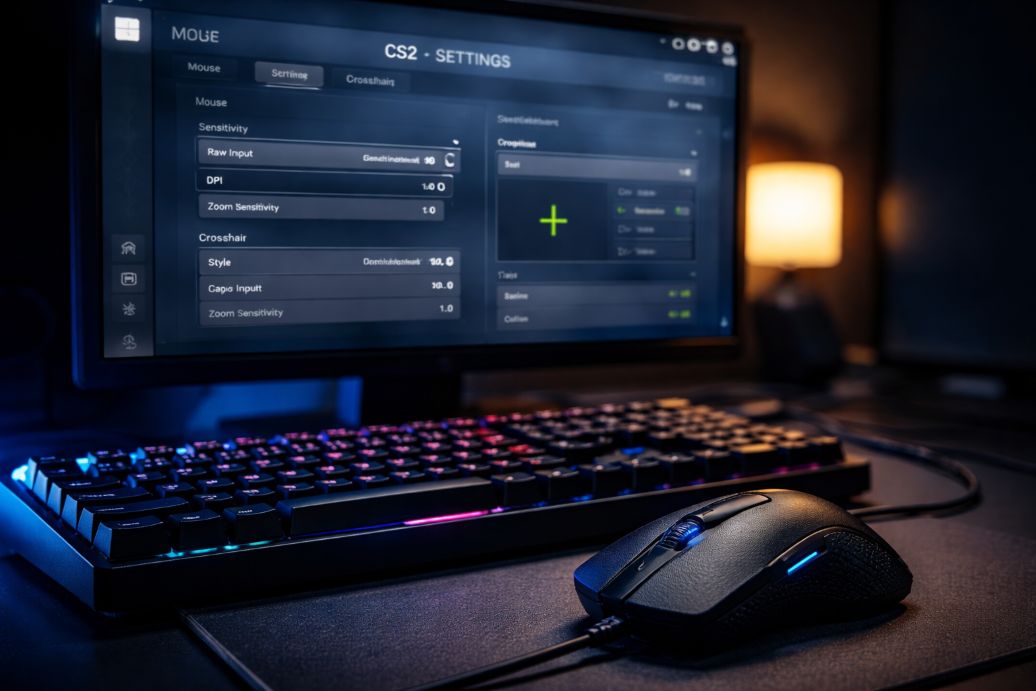
 Thousands of Counter-Strike players search for sensitivity and crosshair settings every single day, hoping to unlock something hidden in the numbers. It sounds simple, almost too simple. Change a few digits, tweak a color, maybe adjust your DPI, and suddenly your aim feels sharper. Or at least, that is the dream.
The obsession runs deep. Forums, Reddit threads, and YouTube comments are packed with players comparing configs from counter strike 2 pro players, treating them almost like secret formulas. Data from platforms like HLTV shows that fans regularly track player stats and setups alongside match results. The logic feels straightforward. If a pro dominates with certain settings, copying them might bring you a step closer to that level. It is part curiosity, part hope, and maybe a bit of superstition too.
Why Players Copy Pro Settings
There is a certain comfort in imitation. When you are stuck missing easy shots or losing duels you feel you should win, changing settings feels like taking control. It is easier than admitting your positioning needs work or your timing is off. So you look outward.
Professional players, especially well-known names like Oleksandr “s1mple” Kostyliev or Nikola “NiKo” Kovač, are seen as benchmarks of mechanical perfection. Fans assume their settings must be optimized down to the smallest detail. Experts note that players often associate performance with tools rather than habits, which explains why copying configs feels like a shortcut.
And honestly, there is a bit of fun in it. Trying a new crosshair or sensitivity can make the game feel fresh again. It is like rearranging your desk before studying, you feel more productive even before you start.
How Configurations Influence Aiming Mechanics
Settings do matter, just not in the magical way people sometimes expect. Sensitivity, for example, directly affects how your hand movements translate into on-screen motion. Lower sensitivity often allows for finer control, while higher sensitivity favors quick turns. Research in motor control, referenced by organizations like the American Psychological Association, shows that consistent input settings help build muscle memory over time.
DPI and in-game sensitivity together define what players call “eDPI,” a number that many competitive players compare. Data indicates that most top-tier players fall within a relatively narrow eDPI range, which suggests there is a sweet spot for control and speed.
Crosshair settings are more personal than technical. Some players prefer small, static crosshairs for precision. Others like dynamic ones that expand during movement. Valve, the developer behind Counter-Strike, has emphasized that visibility and comfort are key factors. If you cannot clearly see your crosshair in a chaotic firefight, it does not matter how “pro” it is.
Still, copying a pro’s settings without understanding your own habits can backfire. A sensitivity that works for a player with thousands of hours might feel uncontrollable to someone still learning recoil patterns. It is like borrowing someone else’s glasses. They might be perfect for them, but blurry for you.
The Community Fascination With Professional Setups
The fascination goes beyond performance. It taps into something more human, the desire to connect with players we admire. Using the same settings as a top-tier competitor creates a small sense of shared experience. You are not just watching them play, you are playing in a similar way, at least on the surface.
There is also a storytelling element. Fans love details. What mouse does a pro use? What resolution? What crosshair gap? These tiny bits of information build a bigger picture, almost like assembling a character profile in a game. Many players rely on centralized gaming resource hubs to quickly find these details, along with mods, forums, and streams, instead of jumping between dozens of sites. Research shows that gamers often prefer curated platforms because they reduce search time and improve safety when accessing community content.
Content creators have leaned into this heavily. “Pro settings” videos rack up millions of views, often showing side-by-side comparisons or testing different configs. Some even try to rank which setups feel best. It becomes entertainment, not just education.
And then there is the placebo effect. Change your settings, and suddenly you feel sharper. Your confidence goes up. You take fights you might have avoided before. Sometimes that alone improves performance. Experts note that confidence can significantly influence reaction time and decision-making in competitive environments.
Finding Balance Between Inspiration and Reality
Copying professional setups is not a bad thing. It can be a great starting point, especially if you are unsure where to begin. Many aspiring players use configurations from elite competitors as a baseline, then tweak them over time.
The key is understanding why those settings work. Instead of blindly copying, ask questions. Does this sensitivity feel controllable? Can I track targets smoothly? Is my crosshair visible in every situation?
Over time, your setup should become your own. The best players did not just copy someone else forever. They experimented, adjusted, and built something that matched their playstyle.
Conclusion
The fascination with professional configurations is not going anywhere. As long as competitive shooters exist, players will keep searching for that perfect setup. Whether it is inspired by elite CS2 competitors, top fraggers in major tournaments, or rising stars in ranked matches, the idea remains the same. Small changes might lead to big improvements.
But the truth is a bit more grounded. Settings are tools, not miracles. They can support good habits, but they cannot replace them. So go ahead, try that new sensitivity. Copy that crosshair. Just do not forget to practice, because no config can aim for you.
And if you do hit that perfect headshot streak after switching settings, well, enjoy it. Even if it is just a little bit placebo. Sometimes, that is part of the fun.